
“My child was in a motorcycle accident six years ago. My wife passed away suddenly four months ago. I know what it feels like to be left alone, and it is not easy.”
-Simon (Surat Untuk Masa Mudaku, 2026)-
Do you still remember Laskar Pelangi (2008)? If so, what memories come to mind when you think of that film? Over the past 15 to 20 years, I have watched countless Indonesian films, perhaps even hundreds or thousands of them. Yet not all of them leave a lasting impression that feels sweet, refreshing, or sentimental. Then came Surat Untuk Masa Mudaku (2026), a family drama that centers on the lives of orphaned children within the setting of an orphanage. Released on Netflix on January 29, 2026, I was quick to watch it. A question soon followed: what exactly does this film offer? Can it match the emotional resonance of the film mentioned earlier? Especially considering how few Indonesian films consistently use an orphanage as their primary narrative space, let alone place the innocence of children at the core of the story. Let us take a closer look.
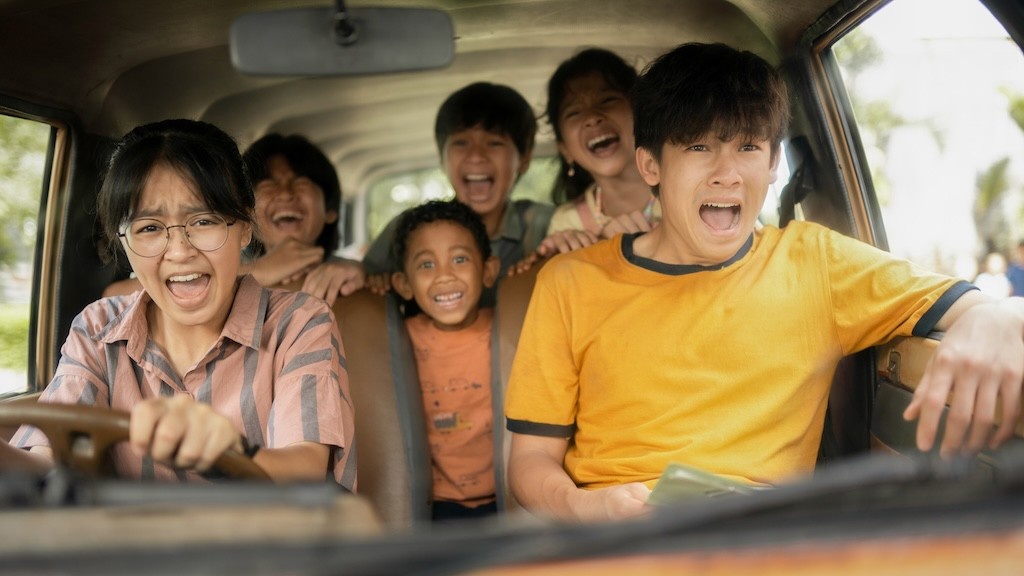
Kefas (Millo Taslim) is a rebellious teenager living at Pelita Kasih Orphanage. His harsh demeanor and simmering anger exhaust the caretakers, particularly because Kefas carries deep wounds from his past, including the loss of someone close that he has never truly accepted. The tension within the orphanage begins to shift when a new caretaker named Simon (Agus Wibowo) arrives. Quiet and empathetic, Simon gradually brings new color into the lives of the children, while opening space for dialogue that had long been sealed by prejudice and anger.
Narratively, the film observes the daily lives of a group of orphanage children often labeled as delinquent and problematic, with a focus on friendship, teenage mischief, and the process of healing childhood trauma. Kefas’s anger once drives him toward resistance and revenge, yet his journey alongside his friends and elderly caretakers leads instead to self-reflection and emotional maturation. Through the relationship between Kefas and Simon, the film portrays an effort to reconcile with loss, to learn surrender, and to rediscover gratitude. Inspired by the director’s personal experiences, the story becomes an intimate reflection on wounds, hope, and the possibility of healing.
At times, I found myself fully immersed in the story the film presents. Although I do not personally relate to the fate of its characters, the way the film is written and packaged feels remarkably accomplished. Feelings of tenderness, pity, disappointment, and reconciliation are built slowly and in layers. If you are not a patient viewer, the first 5 to 15 minutes may feel disappointing. However, for those willing to give it time, the film’s narrative approach constructs emotion with notable strength. We are guided gently, drawn into the personal struggles of each character. The innocence of the children, the restrained dialogue, and conflicts that are essentially predictable still manage to leave a lasting impact. As for plot twists, do not expect too much. This is not a film driven by surprise. Even if the ending can be anticipated, the true emphasis lies in the solid sense of togetherness it cultivates.
Visually, the authenticity of the late 1980s is rendered with warmth and emotional weight. From the orphanage set, period vehicles, to the costumes, everything is presented with precision. A sense of nostalgia emerges through simple details such as radios, diary writing, and the way each character builds emotion without forcing it into something overtly personal. This is where I find myself appreciating the filmmaker’s style. It is fair to say that Sim F appears more mature here than in his previous works. Credit is also due to cinematographer Arief Retno Pribadi, whose work allows the film’s world to feel alive and breathing.
The musical score is handled with equal sensitivity. The composer understands when the music should recede into melancholy and when it should give space to the story. The song “Kidung,” repeated several times, lingers in my mind long after the film ends. There are at least two particularly memorable scenes: when Boni (Halim Latuconsina), the adorable youngest, wakes up earlier than the others, and when the children perform a theatrical choral piece together. Everything is carefully conceptualized and neatly arranged. The natural lighting, combined with bluish accents, adds emotional depth to the story as it unfolds.
As for the performances? Oh God, I am so proud of them. The innocence of the orphanage children is portrayed convincingly. Their chemistry, joy, solidarity, and even moments of racing against time are all well-directed. Most of the cast feels refreshingly new to the film industry, with the exception of Verdi Solaiman and Marthino Lio. Honestly, if this film were submitted to festivals, I believe it could secure at least two or three shortlist placements or nominations, whether for the screenplay, performances, or cinematography. I am particularly impressed by Agus Wibowo as Simon. The way he reconciles with his past and lives his daily life through a quiet negotiation with loneliness feels genuinely wise.
Plot twists are not the main point of debate here. The strength of Surat Untuk Masa Mudaku (2026) lies instead in its presentation: a film that does not rely on mainstream stars, portrays orphanage children without excessive dramatization, and features seasoned actors who perform with calm maturity. All these elements come together neatly, even if not flawlessly. At times, we blame our youth, but time never returns. It is within this realization that the film’s notion of reconciliation operates, building hope while accepting its consequences.
Release Platform: Netflix
Title: Surat Untuk Masa Mudaku | Year of Production: 2025 | Release Year: 2026 | Duration: 2 h 15 m | Director: Sim F | Writer: Daud Sumolang | Producers: Wilza Lubis | Production Houses: Buddy-Buddy Pictures | Country: Indonesia | Cast: Millo Taslim, Fendy Chow, Agus Wibowo, Aqila Herby, Verdi Solaiman, Cleo Haura, Halim Latuconsina, and Willem Bevers.